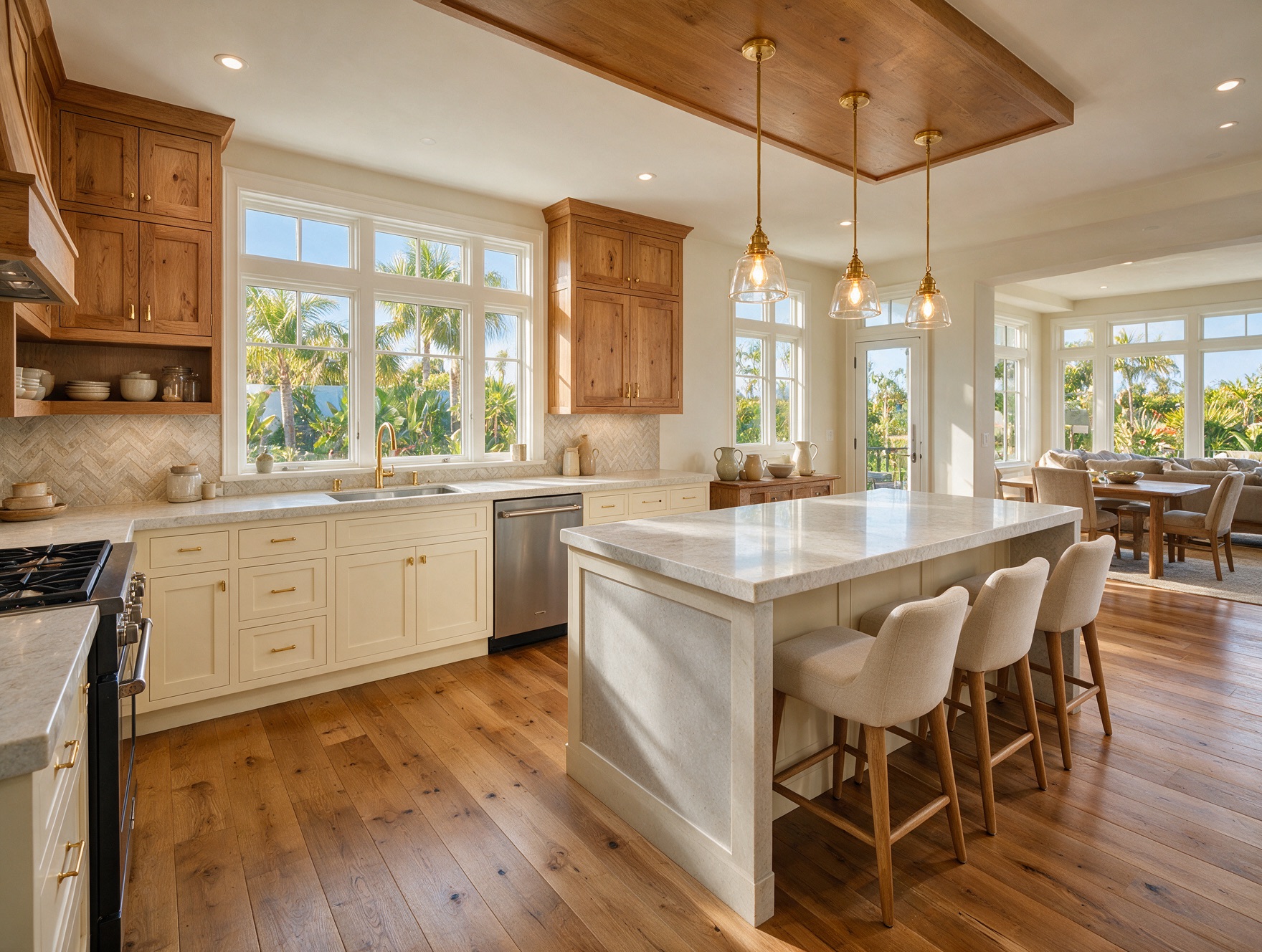
In most kitchen remodels, cabinets are the single biggest cost. They’re also the thing you see and touch every single day. So it’s worth understanding your options before you fall in love with a look you can’t afford — or overpay for something you didn’t need.
Here’s a simple guide to cabinet styles and what they actually cost, in plain English.
The three price tiers
Forget the fancy names for a second. Cabinets come in three basic levels, and the difference is mostly about how custom they are:
- Stock cabinets are made ahead of time in standard sizes. They’re the most affordable, and they come in a set range of sizes and colors. If your kitchen fits those standard sizes well, stock can look great for the money.
- Semi-custom cabinets start from standard sizes but let you tweak things — sizes, finishes, a few upgrades. This is the sweet spot for most San Diego kitchens: a lot of flexibility without the top-tier price.
- Custom cabinets are built from scratch for your exact kitchen. Any size, any style, any finish. Beautiful — and the fastest way to climb to the top of your budget.
Most of our clients land in semi-custom, and most are glad they did. You get a kitchen that fits your space and your taste without paying for things you won’t notice.
The styles you’ll actually choose between
Once you’ve picked a tier, the look comes down to the cabinet door. A few you’ll hear about:
- Shaker — a simple door with a flat center panel and a clean frame around it. It’s the most popular style for a reason: it fits almost any home, modern or traditional, and it doesn’t go out of fashion.
- Flat (slab) — a smooth, flat door with no frame. Clean and modern. Great for a minimal, current look.
- Raised panel — a more traditional door with a center panel that pops out. Warmer and more classic, common in older homes.
If you’re not sure, Shaker is the safe, timeless pick. It’s hard to regret.
The little choices that change the price
Two kitchens with the same cabinet tier can cost very different amounts. Here’s what moves the number:
- Finish. A painted finish usually costs more than a stained wood one, because paint takes more coats and shows every flaw.
- Hardware and extras. Soft-close hinges, pull-out organizers, and fancy trim all add up. Lovely, but optional.
- How many cabinets you need. Obvious, but true — a big kitchen with an island simply needs more.
- Specialty sizes. Odd corners and tall pantry units cost more than standard boxes.
Where cabinets fit in the whole budget
Since cabinets are often the biggest line item, they’re a major reason a kitchen remodel lands where it does inside the typical $30K–$60K range. Going from stock to full custom can move the whole project several thousand dollars by itself.
Here’s our honest advice: spend thoughtfully on cabinets, because you live with them every day — but don’t assume custom is automatically better. A well-chosen semi-custom kitchen in a nice finish often looks just as good as custom to everyone who walks in, for noticeably less money.
A tip that saves real money
If your current cabinets are solid and the layout works, you don’t always need all-new boxes. Sometimes new doors and fresh hardware — or a refinish — gives you a nearly new look for a fraction of the cost. We’ll always tell you when that’s a real option for your kitchen instead of pushing a full replacement you don’t need.
That’s the kind of honest, money-saving call we’d rather make than quietly upsell you. If you want to see how we think about kitchens start to finish, take a look at our kitchen remodeling page.
One more thing worth knowing: cabinets often have the longest lead time of anything in your kitchen. Custom boxes can take weeks or months to build and ship. If your remodel has a deadline — a family visit, a new baby, a move — picking your cabinet tier early matters just as much as picking the look. We’ll always flag that timeline up front so a long cabinet order doesn’t quietly stretch your whole project.
When you’re ready to figure out which cabinet tier and style fit your home and your budget, reach out. We’ll walk through the options with you, explain the trade-offs in plain terms, and help you pick the one that’s right for your kitchen — no pressure either way.