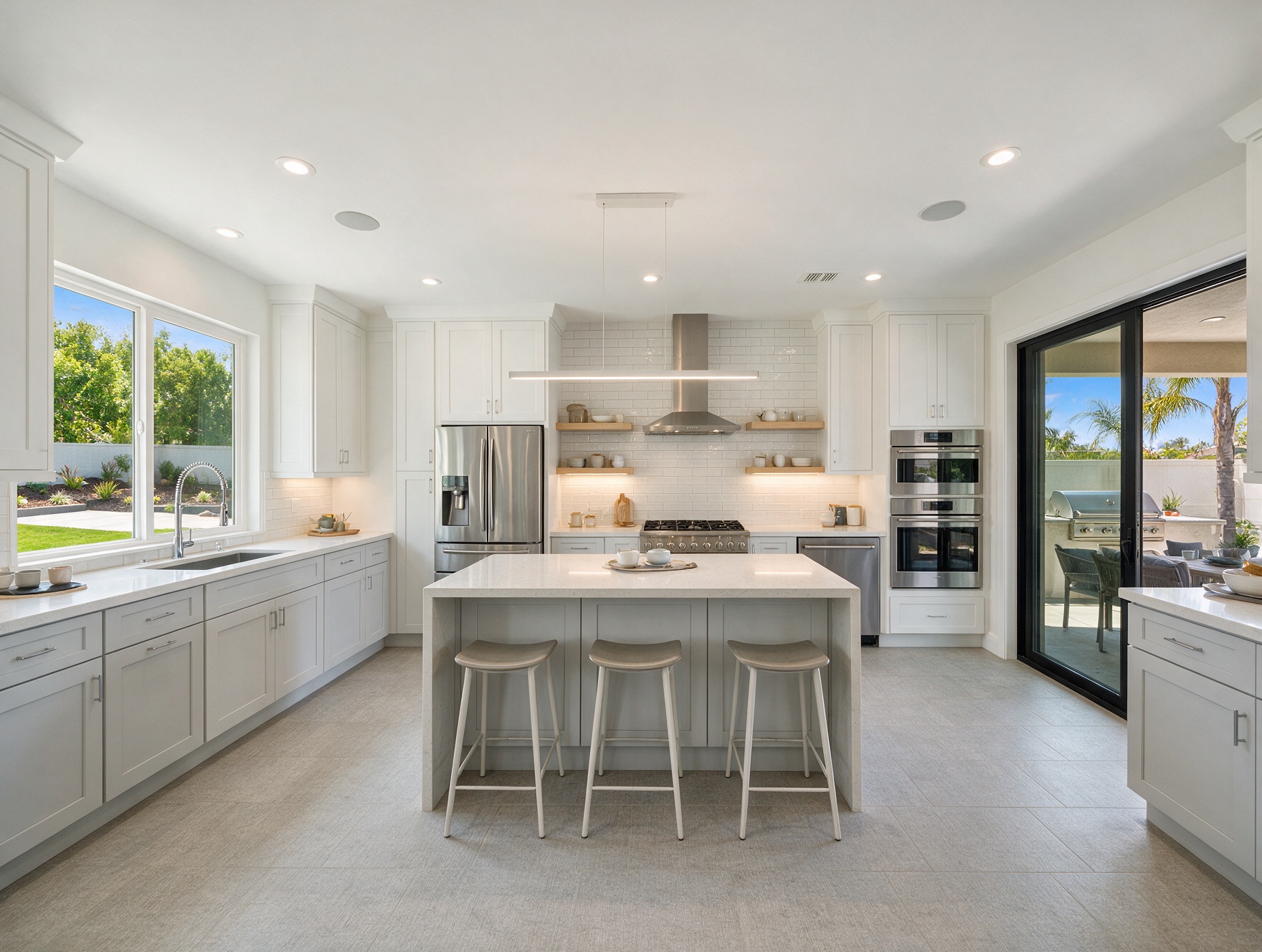
A lot of older San Diego homes were built with the kitchen closed off from the rest of the house. It made sense back then. Today, most families want the opposite — a kitchen that opens into the living room so you can cook, talk, and keep an eye on the kids all at once.
Taking down a wall can completely change how a home feels. But before you fall in love with the idea, there are a few honest things you should know. Some walls come down easily. Some don’t. And a good contractor will tell you which one you’ve got before you start dreaming.
The first question: is it load-bearing?
This is the big one. Walls come in two types:
- A regular (partition) wall just divides space. It’s not holding up anything above it. These are the easy, cheaper ones to remove.
- A load-bearing wall is helping hold up the roof or the floor above. You can still open it — but you have to replace its job with a beam. That beam carries the weight the wall used to carry.
You can’t always tell which is which by looking. We figure it out by checking how the house is framed, where the wall sits, and what’s above it. Never let anyone start swinging a hammer until this is confirmed. Removing a load-bearing wall the wrong way is dangerous and expensive to fix.
What it takes to open a load-bearing wall
If the wall is load-bearing, don’t panic — it’s done all the time. It just adds steps:
- A beam goes in to carry the weight. Depending on the span, it might be wood or steel.
- Posts carry the beam down to the foundation, so the weight has a clear path to the ground.
- A permit is usually required, and often an engineer signs off on the beam size. That’s a good thing — it means it’s being done right.
All of this costs more than taking out a simple partition wall. That’s just the honest math. But it’s often worth it, because opening up the right wall can make a whole house feel twice as big.
What’s hiding inside the wall
Here’s something people forget: walls aren’t just empty. Inside yours, there might be:
- Plumbing pipes
- Electrical wiring and outlets
- Heating or AC ducts
If any of that runs through the wall you want gone, it has to be rerouted somewhere else. In older San Diego homes, we sometimes find old wiring or plumbing that has to be brought up to code while we’re in there. It’s not fun to hear, but it’s far better to deal with it now than to wall it back up and leave a problem behind.
Is it actually worth it for your home?
This is where we try to be the honest voice. Opening a wall is powerful, but it’s not always the right call:
- It’s usually worth it when the kitchen feels boxed-in and dark, and the room on the other side is where everyone wants to be.
- It might not be worth it if the wall is load-bearing, packed with plumbing, and the payoff is small. Sometimes a wide doorway or a pass-through window gets you 80% of the open feeling for a fraction of the cost.
We’ve talked clients out of removing walls when the math didn’t make sense for them. That’s the kind of advice you want before you spend the money, not after.
Where this fits in your budget
Opening a wall is one of the bigger swings in a kitchen remodel, and it’s a real reason some projects climb within the typical $30K–$60K range. A simple partition wall is a modest add. A load-bearing wall with a steel beam and rerouted plumbing is a bigger one. The right answer depends entirely on your specific house — which is why we won’t guess at it over the phone.
If you’re picturing a more open kitchen in your El Cajon or East County home, let’s take a look together. We’ll tell you honestly whether that wall should come down, what it’ll take, and whether there’s a smarter way to get the open feel you want. You can see how we approach kitchens on our kitchen remodeling page, or just reach out — no pressure, we’ll walk you through it.