
A small bathroom can feel like a problem. It isn’t. Some of the best-looking bathrooms we build are the small ones — because a tight space forces smart choices instead of wasted ones. Here are the ideas that actually make a difference, without gimmicks.
Make the room feel bigger (without moving walls)
You can change how big a bathroom feels without changing its size:
- Go with a walk-in shower and clear glass. A glass shower lets your eye travel all the way to the back wall, so the whole room reads larger. A shower curtain or frosted door cuts the room in half visually.
- Use larger tile. Big floor tiles mean fewer grout lines, and fewer lines make a small floor look wider and calmer.
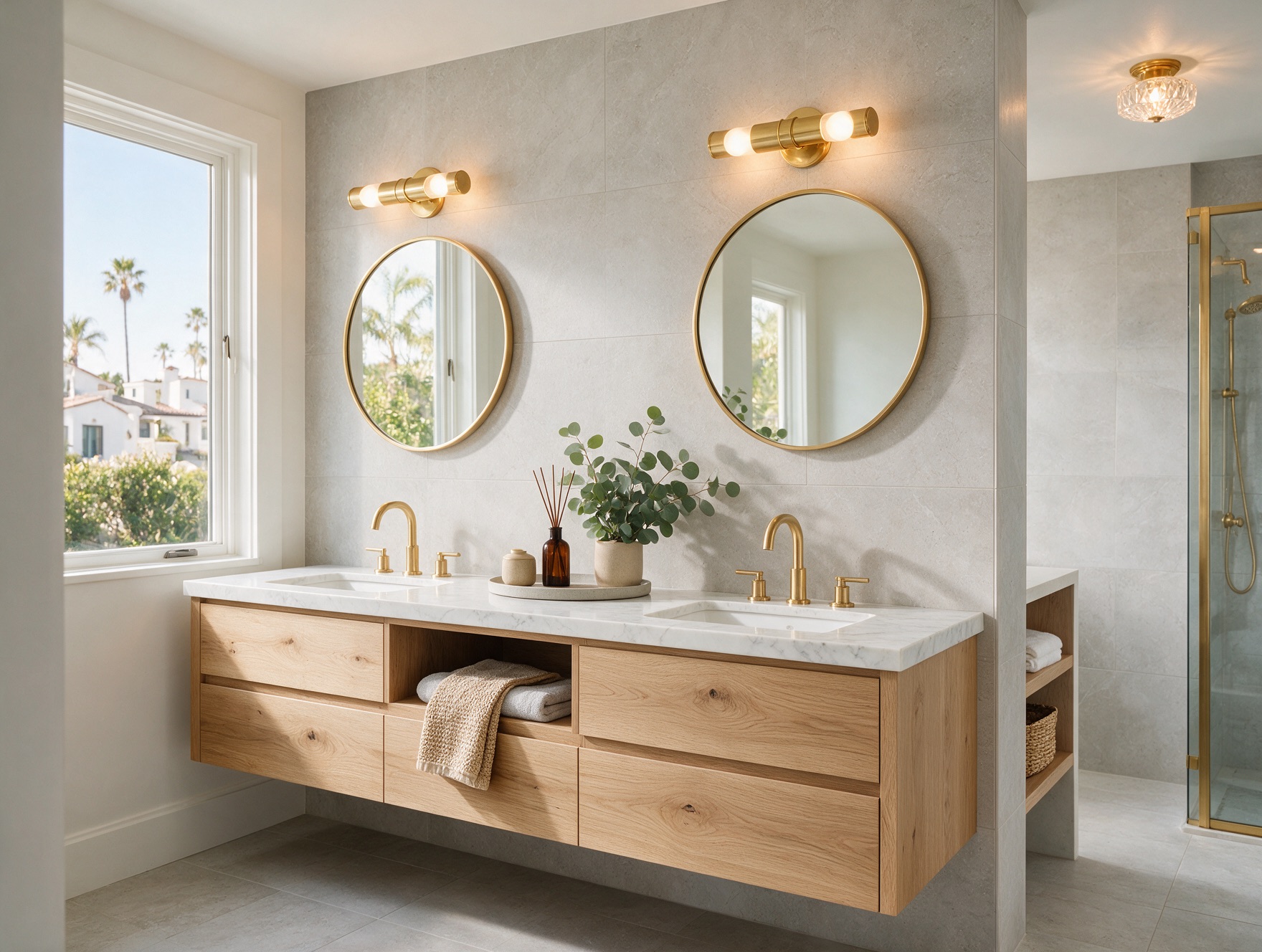
- Float the vanity. A wall-mounted vanity shows more of the floor underneath, which tricks the eye into seeing more space.
- Keep the palette light and simple. Light colors bounce light around. One or two materials, not five, keeps a small room from feeling busy.
Squeeze out more storage
Small bathrooms usually fight you on storage. A remodel is your chance to fix that:
- Build a recessed niche into the shower wall for bottles — it’s free space you’re not using now, carved right into the wall.
- Add a medicine cabinet that sits inside the wall instead of sticking out over the sink.
- Pick a vanity with drawers, not just a door. Drawers hold far more than a cabinet with a single shelf.
- Go vertical. A tall, shallow cabinet over the toilet uses space that’s otherwise wasted.
Pick fixtures that fit the scale
The right-sized fixtures make a small bathroom work instead of feeling cramped:
- A round or compact toilet saves a few inches where every inch counts.
- A corner sink or narrow vanity opens up the walking path.
- A pocket door or outswing door stops the door from eating your floor space when it opens.
None of these cost much more than the standard version. They just take a contractor who thinks about how you’ll actually move through the room.
The idea that matters most
Here’s the one nobody puts on a Pinterest board: in a small bathroom, waterproofing matters even more than in a big one.
Why? In a small room, the shower takes up a bigger share of the space, and the walls are closer to everything — your vanity, your drywall, the room next door. If the waterproof membrane behind the tile gets skipped, or the shower floor doesn’t slope correctly toward the drain, water has nowhere good to go. In a small bath it finds the wall faster and does damage sooner. You won’t see it until there’s a soft spot in the floor or a stain creeping up the baseboard.
This is exactly why we do our own tile and waterproofing in-house instead of handing it to the cheapest sub. The prettiest small bathroom in the world is worthless if it’s rotting behind the tile. Get the invisible layers right, and a small bath can easily last 25 years.
Where to spend and where to save
Small bathrooms have a nice upside: because the space is small, you can often afford a little luxury you couldn’t stretch to in a big room. A few smart places to put your money:
- Spend on the shower tile and glass — it’s what you see and touch every day.
- Spend on the waterproofing. Always. It’s the cheapest insurance you’ll ever buy.
- Save on things you can upgrade later, like the mirror, towel bars, and paint.
A good contractor will tell you honestly where a dollar makes a difference and where it doesn’t. That’s the whole job.
The bottom line
You don’t need a big bathroom to get a great one. You need smart choices, right-sized fixtures, and the invisible layers done right. A small bathroom, remodeled well, can be the nicest room in the house.
Working with a small space? Tell us about it or see examples on our bathroom remodeling page. We remodel bathrooms of every size across La Mesa and nearby San Diego neighborhoods — and we’ll give you honest ideas before we give you a bid.